
Payment to the family of a fallen service member — from the first documents to a decision
You do not need to know the name of the authority or the type of dispute. Choose what has happened to you, or describe it briefly in your own words — we will take it from there.
There is no advance payment for the lawyers’ work. Our fee comes only from the money that actually reaches your account.
Start without collecting every document
Most of the papers have not been obtained yet, and that is normal. To begin, it is enough to tell us what happened.
Why these cases
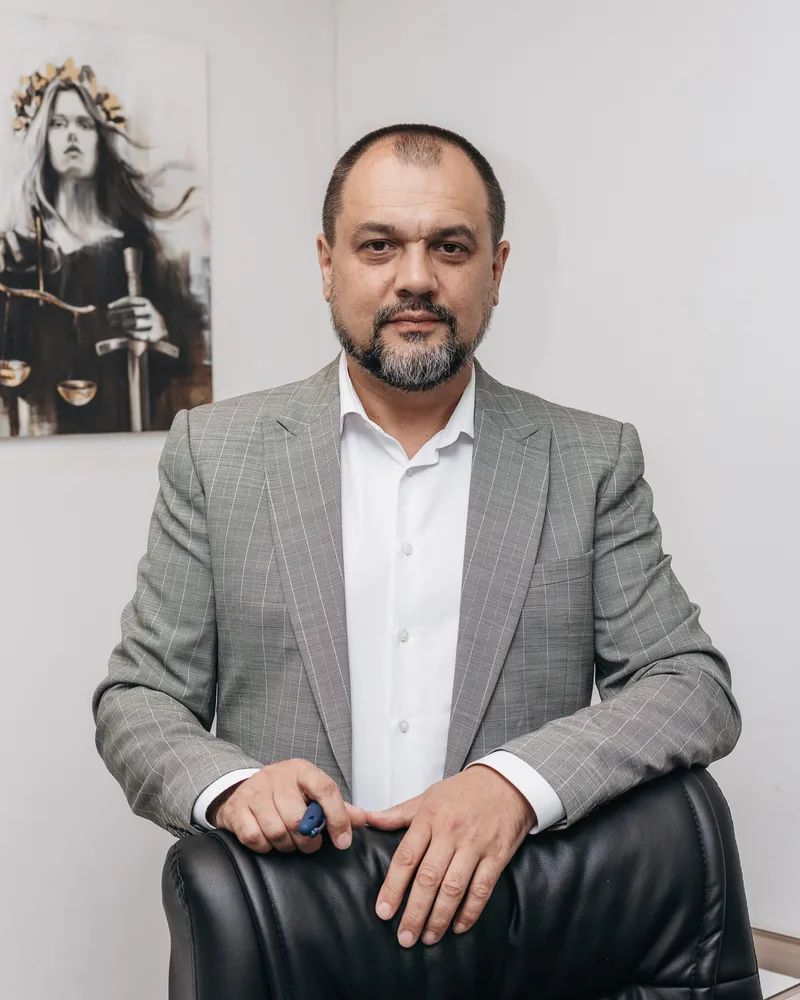
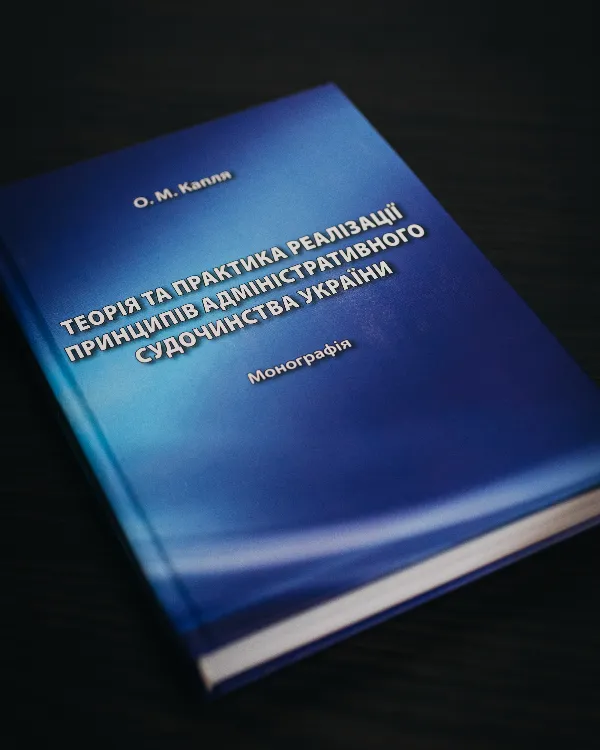
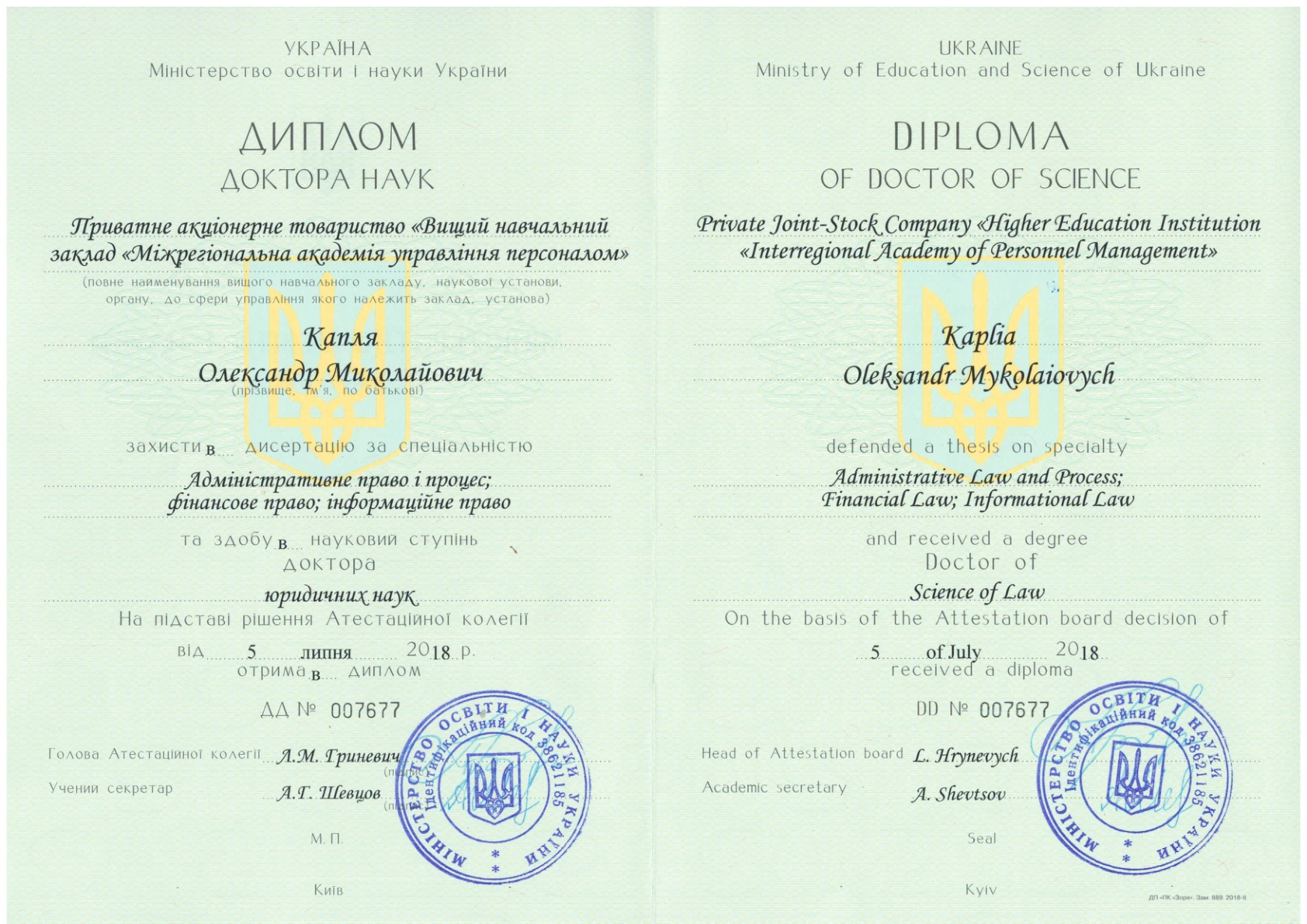
Disputes with the Ministry of Defence, territorial recruitment centres and military units fall within administrative court proceedings. The firm’s managing partner defended his doctoral dissertation on the principles of administrative court proceedings and published a monograph on the subject.
Put simply: what wins or loses these cases in court is what he has studied professionally for twenty years.
- More than 25 years of legal practice
- Doctor of Legal Sciences, Professor — administrative proceedings
What we help with
Choose your situation — we will show what can be done.
Documents submitted, but no answer
Silence is also a decision. A public body has no right simply not to answer: if it stays silent beyond the time limit, its inaction is challenged in the same way as a written refusal.
A case usually gets stuck in one of three places:
- the military unit or the territorial recruitment centre does not issue the document on the circumstances of death;
- the documents were submitted, but went no further;
- the case is not moving, and nobody can say who has it.
What we do
Quite often the case starts moving after the request. Not because anyone was frightened — a document from a lawyer simply has to be answered in writing, and that is quite different from a conversation in a corridor.
What we need from you
A copy of what you submitted and the approximate date. If you have no copy, tell us when and where you submitted it; we will find out the rest ourselves.
You cannot deal with this yourself
There is no dispute here. The problem is different: you do not have the strength or time, or your health does not allow you to go from office to office — or you are simply outside Ukraine. That is reason enough to entrust the matter to a lawyer.
What we take on
- we find out which documents are needed in your particular case, not from a general list;
- we obtain them with advocate’s requests — from the military unit, the territorial recruitment centre, archives, hospitals and the civil registry office;
- we prepare and submit the application;
- we answer the authority’s queries and provide whatever is missing;
- we follow the progress of the case and keep you informed;
- if it comes to court, we represent you in court.
What we need from you
A power of attorney and whatever you already have. After that — answering when the lawyer has questions.
A power of attorney takes nothing away from you. You remain the person to whom the payment is granted, the money goes to your account, and you can revoke the power of attorney at any time — nobody’s consent is needed for that.
If you live outside Ukraine, or the deceased was a foreign citizen
Many families of those who served in Ukraine’s military live abroad, and some of those who died were foreign citizens serving under contract, including in the International Legion. The payment is decided by Ukrainian authorities under Ukrainian law, and the whole case can be handled while you stay where you are.
Who may be entitled
Entitlement depends on the legal ground for the payment and on your family relationship with the deceased, and both are proven with documents. Your citizenship, or where you live, is not in itself a reason to refuse. Before taking a case, we check your particular situation and tell you honestly what we see.
Documents from abroad and receiving the payment
If your documents were issued abroad, or you have no account in a Ukrainian bank, we will tell you how to deal with this in your country.
Power of attorney
You can sign it at a Ukrainian embassy or consulate, or before a local notary. In the second case, depending on the country and applicable agreements, an apostille or legalisation may be required, together with a Ukrainian translation. We will tell you which route is simpler in your country and what the document must contain.
Documents held in Ukraine
Documents from the military unit, the territorial recruitment centre, hospitals and the civil registry we request ourselves, with advocate’s requests. You do not need to come to Ukraine for them.
Language and time zones
Write to us in English and we will reply in writing; a phone call can be arranged separately. Applications to Ukrainian authorities and courts are filed in Ukrainian; we explain what we file and why.
One request: please do not put it off. The time limits are not unlimited, and they are missed most often by families abroad — it seems that this can wait until you are back.
Children, persons declared legally incapable and elderly people
Someone who cannot look after themselves is also entitled to the payment. The only question is who acts on their behalf and what is needed for that.
A child
For a child under fourteen, the parent the child lives with, or a guardian, acts on the child’s behalf. From fourteen, the child signs documents personally, but with the consent of the person who represents them.
A child’s money remains the child’s money. It cannot be spent at someone else’s discretion, and some actions require approval of the guardianship authority. This is not an obstacle but a procedure, and we go through it.
A person declared legally incapable
A guardian acts on their behalf. If that status has not yet been established and the person genuinely cannot understand their actions, guardianship will first have to be established through the courts. Without this, an application made on their behalf will have no legal effect, and time will be wasted.
An elderly person
This is usually simpler: a power of attorney is enough. If the person does not leave home, a notary can come to where they live.
When someone tries to take a child’s share
Sometimes adult relatives agree among themselves in a way that leaves the child with nothing. A child’s share is protected separately, and in such a dispute we represent the child’s interests — even if the person who contacted us is not the child.
Which documents are needed
Almost nobody has the full set, and that does not prevent you from starting. The list is for something else: so that you can see what will have to be collected and who issues it.
If all you have is the death certificate, that is enough to start. We will obtain the rest with advocate’s requests: where a private person waits months for an answer, or gets none, an advocate’s request must be answered in writing.
What it costs
You pay nothing until you receive the money.
There is no advance payment for the lawyers’ work. There is one rule:
Once you receive the payment — 15 percent of the amount granted to you personally, plus the expenses we have incurred in your case.
There is no payment — you pay nothing. Neither a fee nor expenses.
That is why the fee is a percentage, not a fixed sum. A fixed sum you would pay in any case, before anything had been clarified. A percentage means that we carry the risk: if it does not work out, we have lost our time and our money, not you yours.
Case expenses
Court fees, expert examinations, obtaining evidence, requests, translations — all of this costs money and is needed before there is any result.
The firm covers these expenses. The decision is made for each case separately, after we have studied the documents: we do not promise this to everyone, and if we are not ready to do it, we will not stay silent — we will say so plainly and offer other options.
If you receive the payment, the expenses are returned to us together with the fee. If not, they stay with us.
What your particular case will cost
Nobody knows that until they have seen the documents. Anyone who names a figure over the phone is guessing.
We look at what you have and tell you whether we will take the case, what can be done and on what terms. This assessment costs nothing.
The outcome of every case depends on its circumstances and evidence. Nothing on this page is a promise or guarantee of any particular result.
How we work
We will tell you how long it will take after reviewing the documents. We cannot do so before that: giving a timeframe without seeing them would mean promising something beyond our control.
Questions and answers
The payment was refused. Is that final?
No. A refusal is a decision of a public body, not a final verdict. It can be challenged, and in many cases the ground for refusal is removed by documents that were simply missing.
The main thing is not to delay: there is a time limit for a challenge, and it is not unlimited.
A lot of time has passed and there is still no decision. Is that normal?
No, and the silence of a public body can be challenged too. Inaction is challenged in the same way as a refusal.
Things often start moving after an advocate’s request: when a request comes from an advocate, the body must answer in writing and within the time limit.
The payment was granted, but the money has not arrived. What should I do?
This is a different situation from a refusal, and it calls for a different approach. First we need to find out at which stage the process has stopped: the decision to grant the payment, the calculation of the amount due, or the actual transfer of funds. That determines whom to contact.
There are several of us relatives. How is the payment divided?
There is one payment for everyone entitled to it, not the full amount for each person. The group of persons entitled and the size of their shares are set by law.
If relatives disagree, that is a separate court case, and it has to be pursued in parallel, not afterwards.
We were not married, but we lived together for many years. Am I entitled?
This has to be proven in court separately — by establishing the fact that you lived together as one family. Such a case is not simple, but it is not hopeless either: it rests on evidence of a shared household, not on words alone.
My husband had the status of a missing person. Do you take such cases?
No. We do not take cases in which the deceased had the status of a missing person.
We say this here so that you do not spend time on an enquiry we would have to decline.
The father had been absent for years, and now he is claiming a share. What should I do?
This is a common situation, and the law provides for it. It is resolved not by agreement between relatives, but in court.
I live abroad. Can the case be handled from there?
Yes. You do not need to come to Ukraine: documents are sent electronically, and a power of attorney can be signed at a Ukrainian consulate or before a notary where you live.
A time difference is not an obstacle: write to us in English and we will reply in writing; a phone call can be arranged separately. More on this in the section “If you live outside Ukraine”.
How long does it take?
The honest answer is that it depends on the case. Where documents are missing, most of the time goes into obtaining them, not into the procedure itself. Where there is a court dispute, the court sets the time.
We give an estimate after we have seen your papers. Giving one before that would be guessing.
How much do your services cost?
You pay nothing until you receive the money. The fee is 15 percent of the amount granted to you.
Details are in the section “What it costs”.
What do you need from me at the start?
To tell us what happened and show what you have. A full set of documents is not needed at the start — almost nobody has one, and it is exactly what we obtain with advocate’s requests.
If you have no documents at all, that is not a reason not to contact us.
Do I need to travel to Kyiv?
No. Most cases are handled without your personal presence. If your participation is needed, we will tell you in advance and explain why.
Do you guarantee the result?
No, and nobody can. The result depends on the circumstances of the case and the evidence, not on a lawyer’s promises.
What we can guarantee is that we will look at your documents honestly and tell you plainly whether there is a prospect. If there is none, we will say so rather than take the case for the sake of the process.
Why you?
We do not take every case that comes along. This is a separate area of practice where the things that matter are invisible from the outside: the exact ground for a refusal, the time limit for a challenge, the documents that will have to be requested.
The managing partner is a lawyer with 25 years of practice and a Doctor of Legal Sciences.
Describe your situation
It takes a few minutes. No documents are needed at this step — the lawyer will tell you which ones are needed.
Thank you, your enquiry has been received
Your enquiry number: No.
We accept enquiries around the clock and reply Mon–Fri, 9:00–18:00 Kyiv time.
Documents — if you want to send them now
This is optional. The lawyer will tell you during the conversation which documents are needed. Up to 10 files, each up to 15 MB: PDF, photos, Word documents.